Stop Letting Your Molds Move! Let's Talk About How Precast Concrete Magnets Can Save Your Production Line
Anyone in the precast concrete industry knows what the most frustrating moment is. It's not when the concrete sets too quickly, but when you excitedly open the mold, only to find that the side mold has shifted or the inner mold has floated up.

Anyone in the precast concrete industry knows what the most frustrating moment is. It's not when the concrete sets too quickly, but when you excitedly open the mold, only to find that the side mold has shifted or the inner mold has floated up.
At that moment, not only does the scrap rate increase, but the workers' blood pressure also skyrockets.
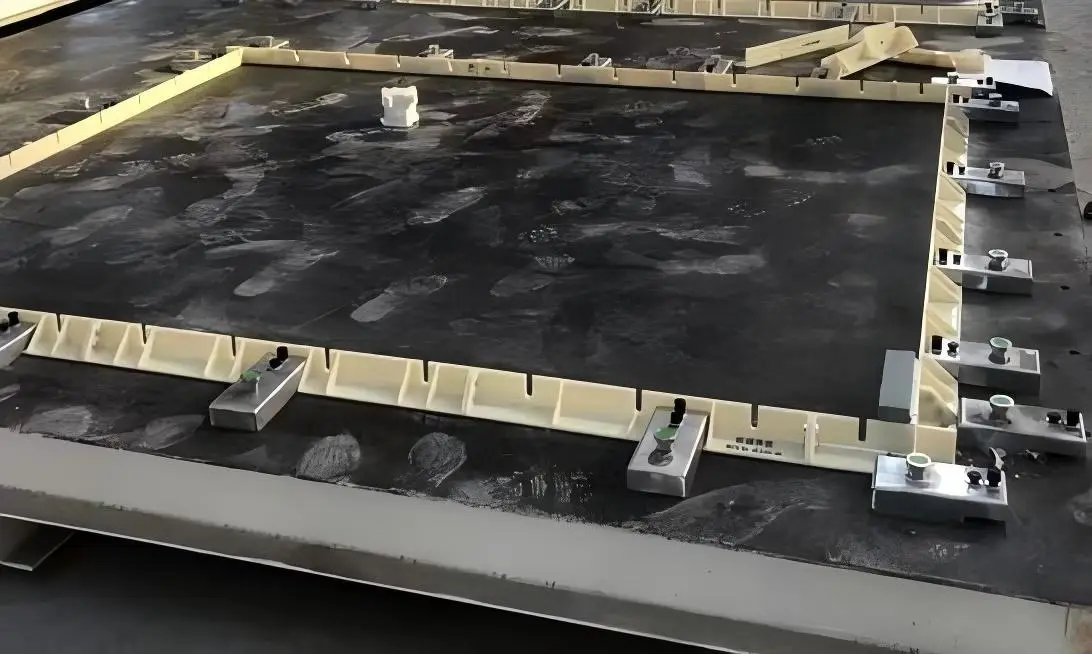
That's when you need a reliable "stabilizing force"—precast concrete magnets. These things may look inconspicuous, but they are definitely one of the most widely used tools in modern concrete plants.
Why are traditional methods no longer effective?
Previously, we used bolts, welding, or simple mechanical fixing, which was not only time-consuming and labor-intensive but also easily damaged the mold surface.
Low efficiency: Each disassembly and assembly required a lot of tightening of screws, which was simply impossible when the schedule was tight.
Poor precision: A slight tremor of the hand would cause the mold to shift, resulting in incorrect component dimensions.
High cost: Molds wear out quickly, and the cost of repairing molds is a significant expense.
Precast concrete magnets, utilizing powerful neodymium iron boron (NdFeB) cores, generate tremendous attraction. Whether it's a steel or wooden mold, simply placing it on the magnet instantly locks it in place.
So what makes this so good?
Many newcomers to PC component production might ask, "Are these magnets really that amazing?" Actually, their advantages are mainly reflected in these aspects:
1. Truly "instantaneous" fixing
No tools, no electricity, not even preheating is needed. Workers simply place the magnet on the edge of the mold, press a switch, or use the mechanical structure to lock it in place; the attraction force of hundreds of kilograms takes effect instantly. This is much faster than tightening screws, saving a significant amount of time each day.
2. Protecting the mold and extending its lifespan
Traditional welding fixing can easily deform the mold due to high temperatures. Magnets, however, use physical attraction, causing almost zero damage to the mold surface. Especially for expensive, precision molds, using magnets can extend their lifespan by several years.
3. High Adaptability and Flexibility
Whether for wall panels, stairs, or complex irregular beams and columns, magnets can find suitable positions to fix the mold. Moreover, modern magnets are designed with user-friendliness in mind; some even have rubber corner protectors to prevent damage to the concrete surface.
Avoidance Guide: Don't Just Look at the Price
There are many manufacturers of precast concrete magnets on the market, with prices varying widely. But I must remind everyone: never be tempted by cheap prices and buy inferior products.
Inferior magnets often experience rapid magnetic decay, losing their magnetic strength after only a few months. Even worse, if the magnetic core is of poor quality, it may suddenly fail during concrete vibration, posing a serious safety hazard.
When purchasing, be sure to check the outer shell material (whether it's wear-resistant steel) and the purity of the magnetic core. Good magnets will maintain strong magnetic strength for three to five years, making them much cheaper than replacing them every year.
In Conclusion
In the precast concrete industry, efficiency is money, and quality is life.
Precast concrete magnets are more than just a tool; they are a microcosm of production line optimization. It simplifies complex fixing processes and minimizes uncontrollable risks.
If you're still struggling with mold fixing, why not try upgrading your "arsenal"? After all, letting machines and tools do the dirty work frees up our hands to earn more money, right?
MORE
18 Jan,2025
Magnetic Box Maintenance Notice Manual

13 Oct,2026
Magnetic Shuttering: Enhancing Efficiency in Electrical Applications

Ningbo Yati Metal Products Co., Ltd.
No. 55, Meiliangqiao Village, Hengjie Town, Haishu District, Ningbo City, Zhejiang Province