Analysis of the Role of Precast Slab Magnets in Precision Control
In the processes of prefabricated construction and precast component production, the precision of the formwork system directly determines the dimensional accuracy and aesthetic quality of the components. Among the various elements involved, the precast slab magnet—serving as a critical component for securing formwork—plays a pivotal role in precision control. Its stability, repeatable positioning capability, and operational convenience exert a significant influence on both production efficiency and product consistency.
In the processes of prefabricated construction and precast component production, the precision of the formwork system directly determines the dimensional accuracy and aesthetic quality of the components. Among the various elements involved, the precast slab magnet—serving as a critical component for securing formwork—plays a pivotal role in precision control. Its stability, repeatable positioning capability, and operational convenience exert a significant influence on both production efficiency and product consistency.
I. Ensuring Formwork Positioning Accuracy
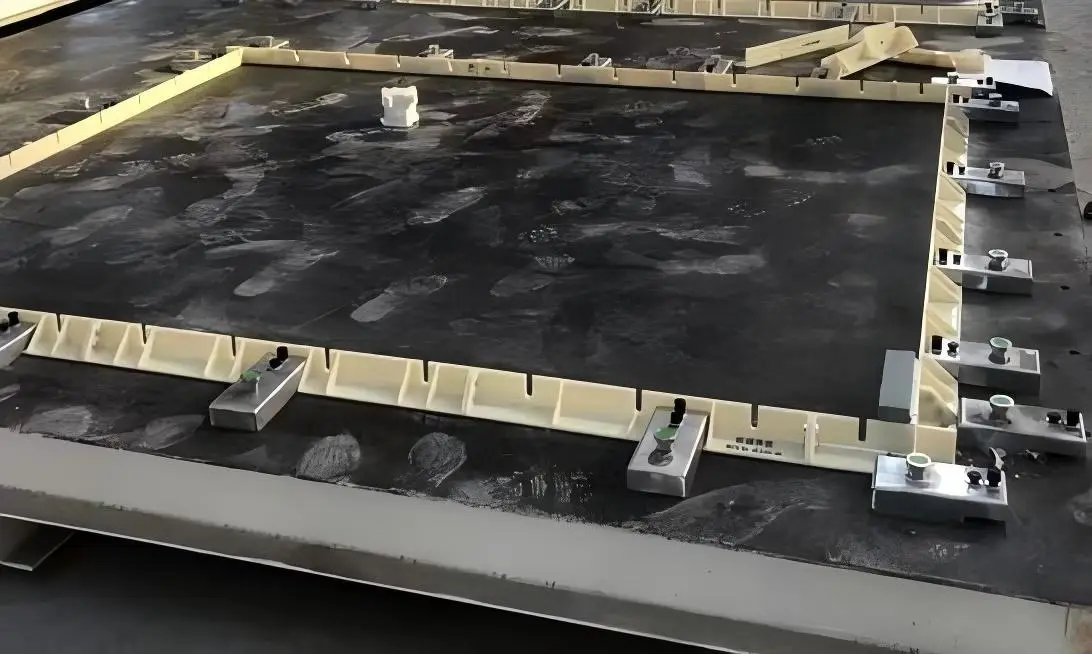
Precast slab magnets adhere to steel casting beds via powerful magnetic forces, enabling rapid and secure positioning. Compared to traditional bolt-fastening methods, these magnetic boxes minimize human error, ensuring the formwork is fixed precisely at its designated location, thereby guaranteeing the dimensional consistency of the precast components. In mass production environments, this high degree of repeatable positioning accuracy is particularly vital, contributing to an overall elevation of precision standards.

II. Enhancing Installation and Adjustment Efficiency
During the production cycle, formwork positions often require adjustment to accommodate different types of precast components. Precast slab magnets facilitate rapid installation and removal, allowing for position shifts without the need for complex tools. This highly efficient adjustment method not only saves time but also mitigates the accumulation of errors that can arise from repeated assembly and disassembly, thereby maintaining stable precision while simultaneously boosting efficiency.
III. Strengthening Structural Stability
During the concrete pouring process, the formwork must withstand substantial lateral pressures. If the formwork is not securely anchored, it is prone to displacement or even deformation, which compromises the quality of the finished product. Precast slab magnets possess strong adhesive forces capable of effectively resisting external disturbances, ensuring the formwork remains stable throughout the pouring process and thereby minimizing dimensional deviations and surface defects.
IV. Reducing Human Operational Errors
Traditional fastening methods rely heavily on manual measurement and tightening, where inconsistent execution can easily lead to positional deviations. In contrast, precast slab magnets are typically designed with standardized positioning structures that render operations simpler and more intuitive, thereby reducing the reliance on the operator's level of experience. This not only enhances production consistency but also facilitates the implementation of standardized management protocols.

V. Improving Product Consistency and Yield Rates
In large-scale manufacturing, precision control is reflected not merely in the quality of individual components but, more importantly, in the overall consistency of the entire production output. By providing a stable and reliable fastening mechanism, precast slab magnets ensure that the formwork maintains the exact same position for every production run. This enhances the dimensional consistency of the precast components, reduces the rates of rework and scrap, and ultimately boosts the enterprise's overall production efficiency. VI. Adapting to Diversified Production Needs
With the advancement of prefabricated construction, the types of structural components are becoming increasingly diverse. Precast slab magnets possess excellent versatility and flexibility, enabling them to adapt to formwork systems of various dimensions and shapes. This flexibility allows them to maintain a high level of precision control, even within complex production environments.
The role of precast slab magnets in precision control is primarily manifested through precise positioning, secure fixation, and efficient adjustment capabilities. By minimizing human error, enhancing installation efficiency, and bolstering structural stability, they provide a reliable guarantee for the production of prefabricated components. In modern industrialized construction manufacturing, precast slab magnets have emerged as an essential tool for elevating both precision and efficiency.
MORE
18 Jan,2025
Magnetic Box Maintenance Notice Manual

13 Oct,2026
Magnetic Shuttering: Enhancing Efficiency in Electrical Applications

Ningbo Yati Metal Products Co., Ltd.
No. 55, Meiliangqiao Village, Hengjie Town, Haishu District, Ningbo City, Zhejiang Province