Application Scenarios of Precast Slab Magnets in Industrialized Construction
With the rapid development of prefabricated construction and industrialized building models, precast slab magnets—serving as a vital component of formwork fixing systems—are now widely utilized in the production of precast concrete components. By employing high-strength magnetic force to replace traditional bolt-based or welded fixing methods, these magnets play a pivotal role in enhancing both efficiency and precision.
With the rapid development of prefabricated construction and industrialized building models, precast slab magnets—serving as a vital component of formwork fixing systems—are now widely utilized in the production of precast concrete components. By employing high-strength magnetic force to replace traditional bolt-based or welded fixing methods, these magnets play a pivotal role in enhancing both efficiency and precision.
I. Applications in Precast Wall Panel Production
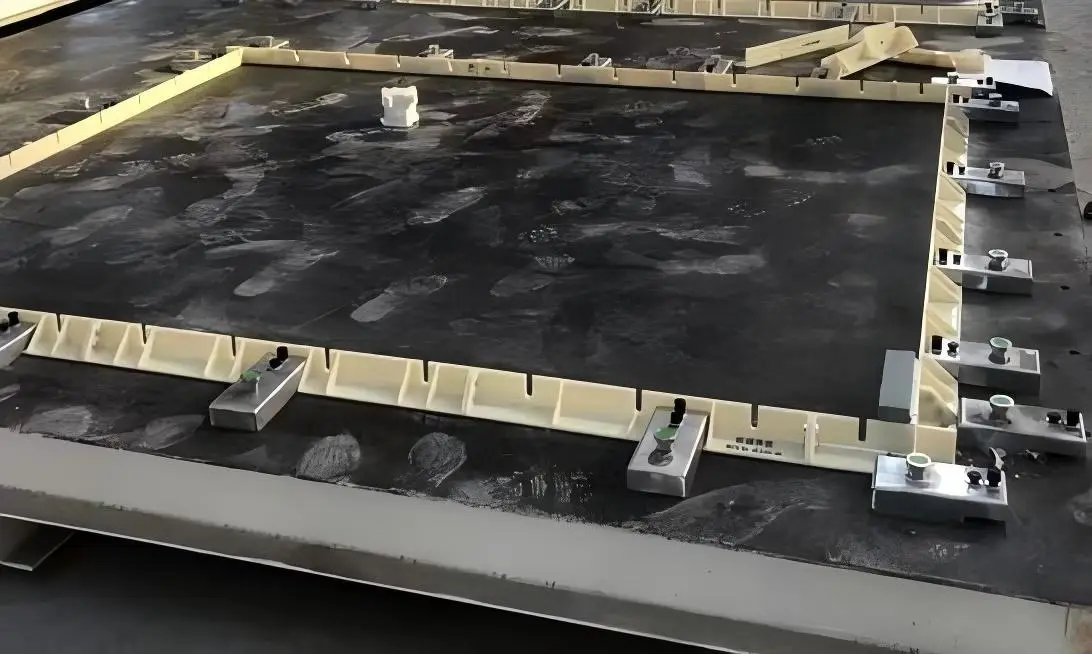
In production lines for precast concrete wall panels, precast slab magnets are primarily used to secure side formwork and partition molds. By adhering magnetically to the surface of steel formwork, they enable rapid positioning and fixation, thereby effectively eliminating the time wasted on the repetitive assembly and disassembly associated with traditional bolts. Furthermore, this magnetic fixing method does not compromise the structural integrity of the formwork, thereby increasing the molds' reusability rate.

II. Production of Floor Slabs and Stair Components
During the manufacturing process of floor slabs and precast stair components, magnetic systems allow for flexible adjustment of mold positions to accommodate the production requirements of components varying in size and shape. Given the inherent stability of magnetic fixation, the molds remain firmly in place—even during the vibration-assisted pouring of concrete—thereby ensuring the dimensional accuracy of the finished products.
III. Industrial Plants and Large-Scale Component Manufacturing
In the construction of industrialized factory buildings, the production of large-scale wall panels or load-bearing structural components is frequently required. Precast slab magnets provide a powerful fixing solution suitable for large-format steel formwork systems, allowing for a reduction in the number of required support structures and boosting overall construction efficiency. Additionally, their modular design facilitates rapid on-site layout adjustments.
IV. Applications in Automated Production Lines
In modern automated production lines for precast components, magnetic formwork systems have become a standard configuration. When integrated with robotic systems or automated placement equipment, these systems enable the rapid exchange and precise positioning of formwork, significantly accelerating production cycles and meeting the demands of large-scale industrialized manufacturing.

V. Comprehensive Advantages and Future Trends
Compared to traditional mechanical fixing methods, precast slab magnets offer distinct advantages, including rapid installation, easy removal, and high reusability. Furthermore, they minimize the need for manual labor while simultaneously enhancing workplace safety. As prefabricated construction continues to gain widespread adoption, magnetic fixing systems are evolving toward higher load-bearing capacities, more intelligent control capabilities, and greater modularity.
In the realm of industrialized construction, the application of precast slab magnets has evolved from that of a mere fixing tool into that of a critical system component—one that is instrumental in driving improvements in both production efficiency and precision. In the future, as the level of industrialization in the construction sector continues to rise, its scope of application will further expand, and it will play an increasingly significant role within the intelligent manufacturing ecosystem.
MORE
18 Jan,2025
Magnetic Box Maintenance Notice Manual

13 Oct,2026
Magnetic Shuttering: Enhancing Efficiency in Electrical Applications

Ningbo Yati Metal Products Co., Ltd.
No. 55, Meiliangqiao Village, Hengjie Town, Haishu District, Ningbo City, Zhejiang Province