Can Precast Formwork Magnets Be Used for the Production of Large Precast Components?
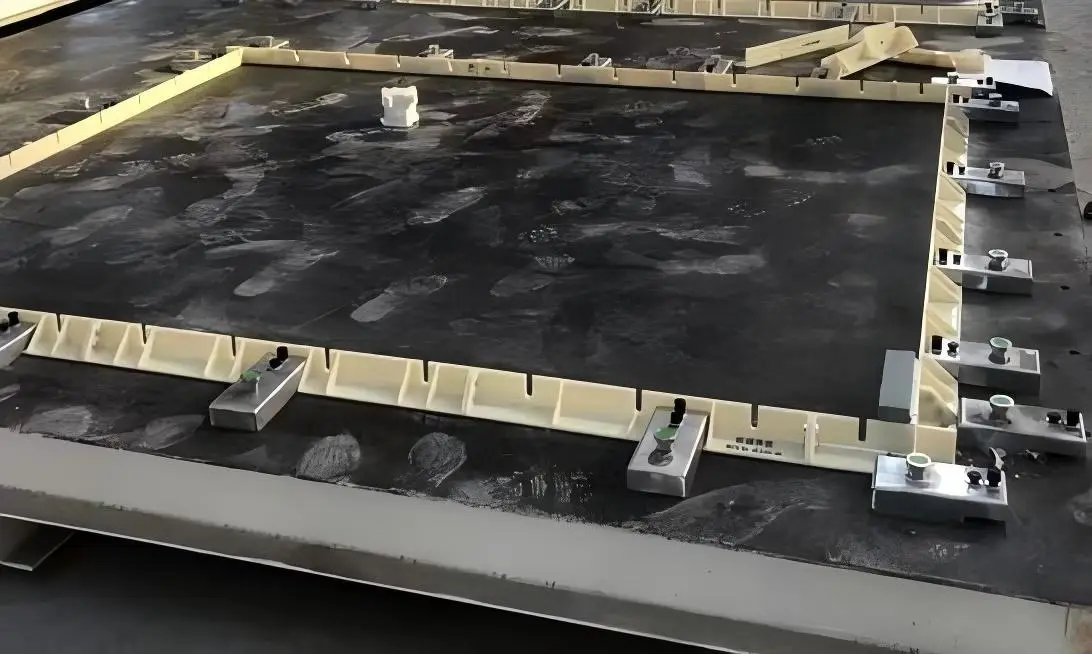
As the prefabricated construction industry continues to evolve, the demand for the production of large-scale precast components is constantly on the rise. To enhance formwork installation efficiency and the dimensional accuracy of finished components, an increasing number of factories are adopting Precast Formwork Magnets for mold fixation. But can Precast Formwork Magnets truly be applied effectively to the production of large precast components? Based on practical application, the answer is a resounding yes.
As the prefabricated construction industry continues to evolve, the demand for the production of large-scale precast components is constantly on the rise. To enhance formwork installation efficiency and the dimensional accuracy of finished components, an increasing number of factories are adopting Precast Formwork Magnets for mold fixation. But can Precast Formwork Magnets truly be applied effectively to the production of large precast components? Based on practical application, the answer is a resounding yes.

Large precast components are typically characterized by their massive volume, heavy weight, and the intense hydrostatic pressure exerted during concrete pouring—factors that impose rigorous demands on formwork fixation systems. Traditional methods involving bolted connections or welding are not only cumbersome to install but also inefficient to dismantle, often disrupting the overall production rhythm. In contrast, Precast Formwork Magnets leverage their powerful magnetic suction capabilities to rapidly and securely anchor formwork to steel casting beds, thereby drastically reducing manual installation time and boosting overall production efficiency.
During the production of large precast elements—such as wall panels, staircases, beams, and columns—the formwork must withstand significant lateral pressure from the concrete. If the fixation is inadequate, issues such as formwork displacement, concrete leakage, or even dimensional inaccuracies may easily arise. High-performance Precast Formwork Magnets typically possess exceptional holding power, effectively guaranteeing the stability of the formwork throughout the pouring process and, consequently, enhancing both the structural quality and dimensional precision of the finished components.
Furthermore, the production of large components often necessitates frequent adjustments to mold dimensions and layouts. Precast Formwork Magnets facilitate a flexible, movable fixation method that requires neither drilling nor welding; this allows operators to quickly reposition the formwork to accommodate varying component specifications, thereby boosting the flexibility of the production line. This feature is particularly well-suited to meet the production demands for multi-specification, small-batch, and customized precast components.
However, when utilizing Precast Formwork Magnets in the production of large precast components, it is essential to select the appropriate products based on actual working conditions. For instance, one must carefully select a magnetic box with the appropriate suction strength by taking into account factors such as the weight of the formwork, the hydrostatic pressure of the concrete, and the thickness of the steel casting bed. Insufficient suction power may result in formwork slippage or loosening, whereas excessive suction power could complicate the dismantling process. Therefore, the scientific configuration of the magnetic fixation system is absolutely critical.
Additionally, routine maintenance plays a direct role in ensuring optimal performance. Keeping the contact surface of the magnetic box clean—specifically by preventing the accumulation of concrete residue—ensures a consistent and stable magnetic output, thereby minimizing fixation issues caused by incomplete or compromised adhesion.

Precast formwork magnets not only meet the stability and precision requirements for the production of large-scale precast components but also effectively enhance production efficiency and reduce labor costs; consequently, they have become one of the most critical formwork-fixing devices in modern prefabricated construction factories.
MORE
18 Jan,2025
Magnetic Box Maintenance Notice Manual

13 Oct,2026
Magnetic Shuttering: Enhancing Efficiency in Electrical Applications

Ningbo Yati Metal Products Co., Ltd.
No. 55, Meiliangqiao Village, Hengjie Town, Haishu District, Ningbo City, Zhejiang Province