How Precast Concrete Magnets Adapt to Formwork of Different Thicknesses
In the precast concrete production process, the stability of the formwork system directly affects the dimensional accuracy and production efficiency of concrete components. Since different types of precast components have different requirements for formwork thickness, structural strength, and installation methods, adapting fixing equipment to formwork of various thicknesses has become a crucial issue for production companies. Precast concrete magnets, with their flexible installation methods and adjustable design, can effectively meet the fixing needs of formwork of different thicknesses, improving the adaptability of precast concrete production.
In the precast concrete production process, the stability of the formwork system directly affects the dimensional accuracy and production efficiency of concrete components. Since different types of precast components have different requirements for formwork thickness, structural strength, and installation methods, adapting fixing equipment to formwork of various thicknesses has become a crucial issue for production companies. Precast concrete magnets, with their flexible installation methods and adjustable design, can effectively meet the fixing needs of formwork of different thicknesses, improving the adaptability of precast concrete production.

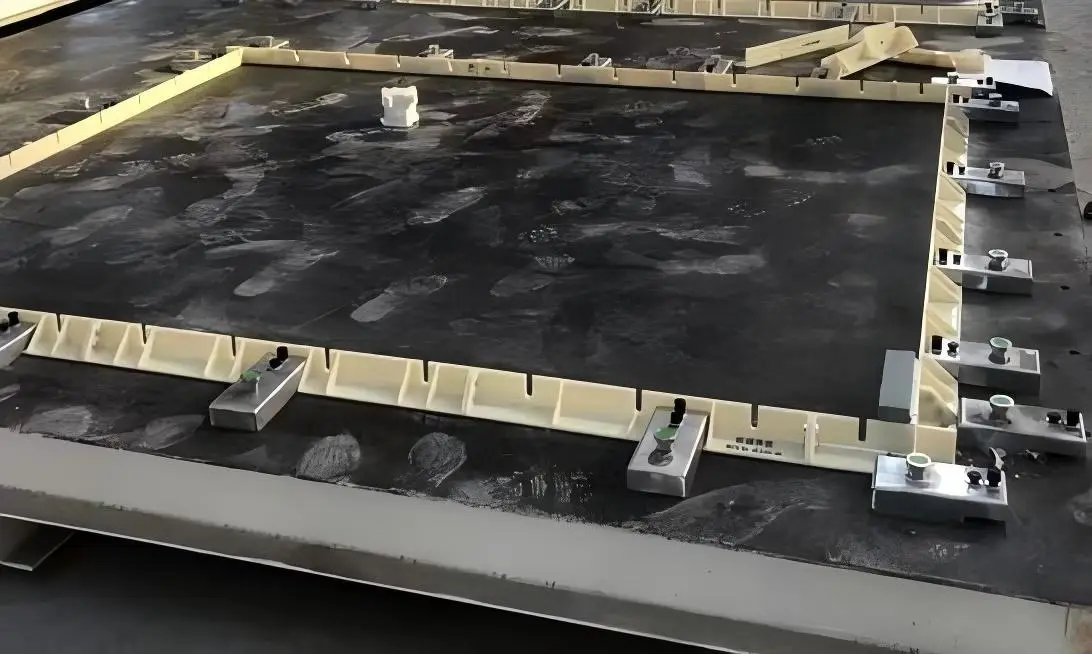
Precast concrete magnets primarily rely on internal high-performance permanent magnet materials to generate strong adsorption force, firmly fixing the side formwork to the steel production platform. Different thicknesses of formwork have different weights and stress conditions; therefore, the magnets need to be selected with appropriate magnetic strength based on the actual application environment.
For thinner formwork, generally, excessive adsorption force is not required; precast concrete magnets with medium magnetic strength are sufficient for fixing, avoiding increased operational difficulty during disassembly. However, for thicker steel formwork or formwork subjected to higher concrete pressure, magnets with higher adsorption force are required to ensure the formwork remains stable during pouring and vibration.
To adapt to different specifications of formwork, many professional precast concrete magnets adopt modular or adjustable structural designs. For example, by adjusting the magnet's installation position, adding auxiliary fixing components, or changing the connection method, the same type of magnet can be made suitable for various template sizes.
Some magnet systems are equipped with a switch control structure, allowing operators to easily control the release and fixation of the magnetic force. When installing the template, the magnet is activated for quick positioning; when dismantling, the magnetic force is deactivated, allowing for easy template movement. This design not only works with templates of different thicknesses but also improves the operational efficiency of the production line.

Besides thickness differences, the template material also affects the effectiveness of precast concrete magnets. Common templates include steel templates, aluminum templates, and templates with special coatings. Since magnets primarily act on magnetic metal surfaces, the magnetic attraction properties of the template material must be considered when selecting one.
For thicker steel templates, magnets provide a stable fixing effect; for non-magnetic templates, steel connectors or special adapters are required. Professional precast concrete magnet manufacturers can typically provide matching solutions based on the customer's template type, size, and production process.
Different template thicknesses not only affect the attraction force required for a single magnet but also the number of magnets that can be installed. If the formwork is tall, thick, or subjected to significant lateral concrete pressure, the number of magnets needs to be increased to ensure more even stress distribution and prevent localized deformation.
By rationally calculating the formwork weight, concrete pressure, and vibration intensity, the optimal number and installation positions of magnets can be determined, thereby ensuring the formwork remains stable throughout the pouring process.
MORE
18 Jan,2025
Magnetic Box Maintenance Notice Manual

13 Oct,2026
Magnetic Shuttering: Enhancing Efficiency in Electrical Applications

Ningbo Yati Metal Products Co., Ltd.
No. 55, Meiliangqiao Village, Hengjie Town, Haishu District, Ningbo City, Zhejiang Province