How Precast Shuttering Magnets Reduce Manual Installation Errors
In the production of precast concrete components, the accuracy of formwork installation directly affects the component's dimensions, surface quality, and subsequent assembly results. Traditional formwork fixing methods typically rely on welding, bolts, or clamps for positioning, which are not only cumbersome but also prone to errors due to variations in human skill levels. With the development of the prefabricated building industry, precast shuttering magnets (Precast Shuttering Magnets) have become an important solution for reducing manual installation errors due to their efficient and precise fixing method.
In the production of precast concrete components, the accuracy of formwork installation directly affects the component's dimensions, surface quality, and subsequent assembly results. Traditional formwork fixing methods typically rely on welding, bolts, or clamps for positioning, which are not only cumbersome but also prone to errors due to variations in human skill levels. With the development of the prefabricated building industry, precast shuttering magnets have become an important solution for reducing manual installation errors due to their efficient and precise fixing method.
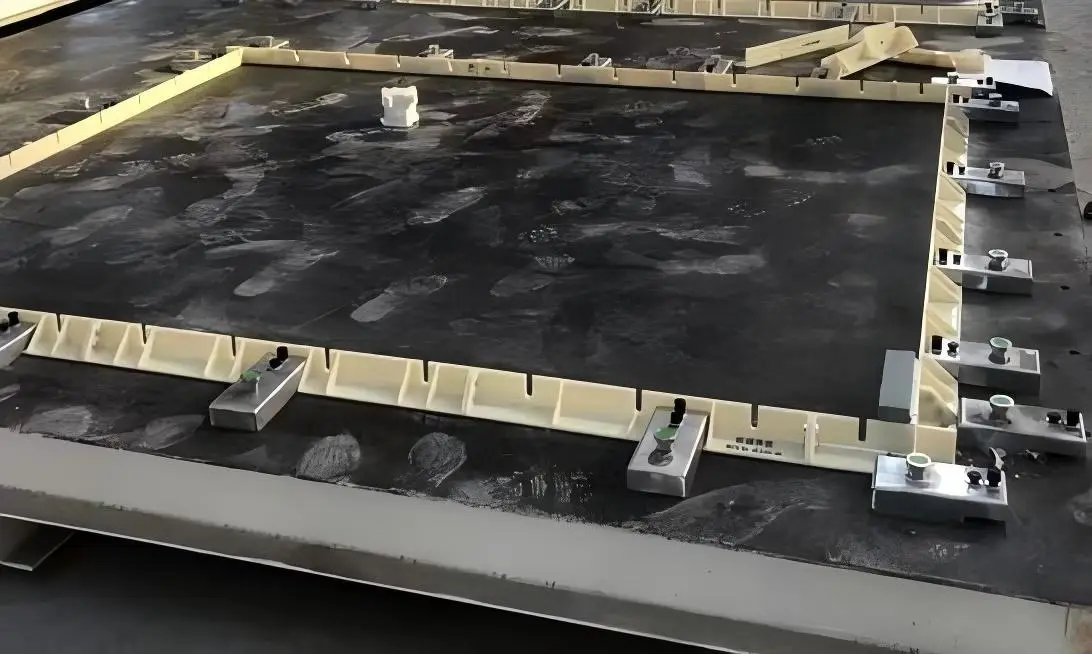
Precast shuttering magnets are made of high-performance permanent magnet materials and are directly fixed to the surface of the steel formwork table through strong magnetic attraction, eliminating the need for welding or drilling. Operators only need to place the formwork in the designated position according to the design dimensions and then activate the magnetic box to complete the fixing, significantly simplifying the installation process. Compared to traditional fixing methods, the magnetic box reduces the steps of measurement, calibration, and repeated adjustments, effectively reducing dimensional deviations caused by inaccurate manual positioning.

In actual production, the requirements for component size control are becoming increasingly stringent, especially for products such as wall panels, composite slabs, stairs, and irregularly shaped components, which have high requirements for formwork position accuracy. Precast shuttering magnets can be used in conjunction with positioning rulers, measuring tools, and automated production systems to achieve rapid and precise template positioning. A standardized installation process allows different operators to complete tasks according to the same procedure, reducing the impact of human factors on production quality.
For production lines that frequently change template specifications, the advantages of template magnetic boxes are even more pronounced. Traditional fixing methods require re-welding or disassembling accessories every time the template is adjusted, which is not only time-consuming but also prone to positioning errors. Magnetic boxes, on the other hand, can be quickly released and re-fixed, helping operators efficiently complete template adjustments, improving production flexibility, and ensuring consistent installation positions each time.
Furthermore, precast shuttering magnets offer strong fixing stability. During concrete pouring and vibration, the template is less prone to displacement or loosening, effectively preventing dimensional deviations in components caused by template offset. This not only improves product qualification rates but also reduces rework and material waste, saving production costs for enterprises.
As precast component factories develop towards automation and standardization, precast shuttering magnets are becoming an important component of modern production lines. By simplifying the installation process, improving positioning accuracy, enhancing fixation stability, and reducing reliance on human experience, precast shuttering magnets can significantly reduce human installation errors, helping companies achieve higher quality and more efficient precast component production.
MORE
18 Jan,2025
Magnetic Box Maintenance Notice Manual

13 Oct,2026
Magnetic Shuttering: Enhancing Efficiency in Electrical Applications

Ningbo Yati Metal Products Co., Ltd.
No. 55, Meiliangqiao Village, Hengjie Town, Haishu District, Ningbo City, Zhejiang Province