How Shuttering Magnets Adapt to Formwork of Varying Thicknesses
In the fields of prefabricated construction and precast concrete production, shuttering magnets are widely utilized within formwork fixing systems. Since different precast components impose distinct requirements regarding formwork dimensions, thickness, and structural strength, the actual thickness of the formwork itself varies significantly. Consequently, the question of how to enable shuttering magnets to adapt to formwork of varying thicknesses has become a critical concern for many precast component manufacturing plants.
In the fields of prefabricated construction and precast concrete production, shuttering magnets are widely utilized within formwork fixing systems. Since different precast components impose distinct requirements regarding formwork dimensions, thickness, and structural strength, the actual thickness of the formwork itself varies significantly. Consequently, the question of how to enable shuttering magnets to adapt to formwork of varying thicknesses has become a critical concern for many precast component manufacturing plants.

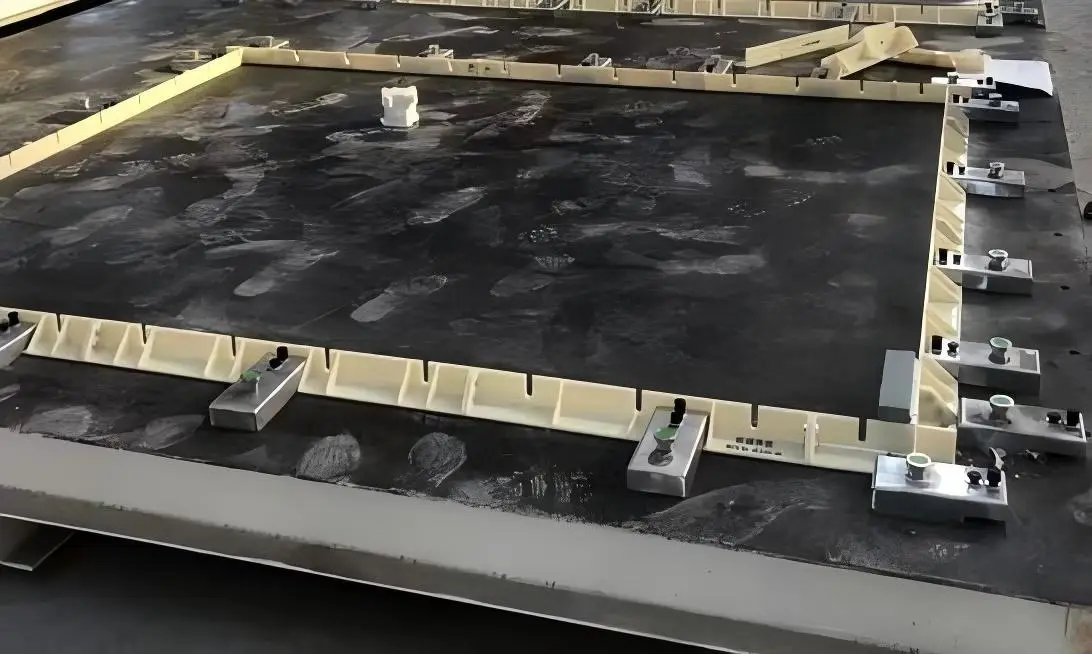
Shuttering magnets inherently possess a high degree of installation flexibility. Traditional formwork fixing methods typically rely on welding or bolted connections; whenever the formwork thickness changes, these methods necessitate redrilling holes or structural readjustments. In contrast, magnetic fixing systems can adhere directly to a steel casting platform. By utilizing accompanying side pressure plates, connecting components, or adjustable brackets, these systems can accommodate formwork structures of varying heights and thicknesses, thereby substantially enhancing installation flexibility.
Shuttering magnets with varying suction force specifications can meet a diverse range of formwork requirements. For thinner formwork, small-to-medium suction force magnet boxes are typically sufficient to ensure stable fixation, preventing difficulties in formwork adjustment that might arise from excessive magnetic force. Conversely, for thicker formwork or large-scale precast wall panels, high-suction models can be selected to ensure that the formwork remains firmly in place—without shifting—during the concrete pouring process. This multi-specification configuration approach allows shuttering magnets to be effectively applied across a wide spectrum of production scenarios, ranging from lightweight components to massive structural elements.
Furthermore, the use of adjustable accessory systems is a key factor. Many modern shuttering magnets are designed to be used in conjunction with height adjusters, lateral clamps, and steel-edge adapters. When the formwork thickness changes, operators need only adjust the positioning of these accessories to secure the formwork, eliminating the need to replace the entire fixing assembly. This not only reduces production costs but also boosts the efficiency of production line changeovers—a feature particularly well-suited for manufacturing environments involving the mixed-line production of multi-specification products.

In practical applications, an increase in formwork thickness is accompanied by a corresponding increase in the lateral pressure exerted by the wet concrete. Therefore, shuttering magnets must not only possess sufficient suction force but also maintain a stable contact interface. High-quality products typically feature high-performance magnetic cores encased in thickened steel shells; this robust construction ensures excellent fixing stability—even when used with thicker formwork—thereby minimizing issues such as concrete slurry leakage and formwork displacement.
Additionally, manufacturing plants should periodically inspect the flatness of the magnet box bases, adjusting them as necessary based on the formwork thickness in use. If the base of a magnet box becomes contaminated with residual concrete or metal debris, it will compromise the magnetic contact efficiency and, consequently, reduce the overall fixing capability. Maintaining equipment cleanliness is a crucial step in ensuring the stable and reliable accommodation of formwork of varying thicknesses.
Thanks to their flexible installation, a range of suction strengths, and an adjustable accessory system, Shuttering Magnets are highly capable of meeting the requirements of formwork with diverse thickness specifications. For modern precast concrete factories, this efficient and convenient method of fixation not only boosts production efficiency but also provides greater flexibility for the manufacturing of a diverse range of products.
MORE
18 Jan,2025
Magnetic Box Maintenance Notice Manual

13 Oct,2026
Magnetic Shuttering: Enhancing Efficiency in Electrical Applications

Ningbo Yati Metal Products Co., Ltd.
No. 55, Meiliangqiao Village, Hengjie Town, Haishu District, Ningbo City, Zhejiang Province