Methods of Improving Production Efficiency with Precast Concrete Magnets
With the continuous development of the precast building industry, factory-based and standardized production has become an industry trend. In the production of precast concrete components, the efficiency of mold fixing directly affects overall production capacity and product quality. Precast Concrete Magnets, as an important auxiliary tool in modern precast component production, are helping more and more factories improve production efficiency due to their advantages of quick installation, secure fixing, and high reusability.
With the continuous development of the precast building industry, factory-based and standardized production has become an industry trend. In the production of precast concrete components, the efficiency of mold fixing directly affects overall production capacity and product quality. Precast Concrete Magnets, as an important auxiliary tool in modern precast component production, are helping more and more factories improve production efficiency due to their advantages of quick installation, secure fixing, and high reusability.
Quick Installation Reduces Production Time
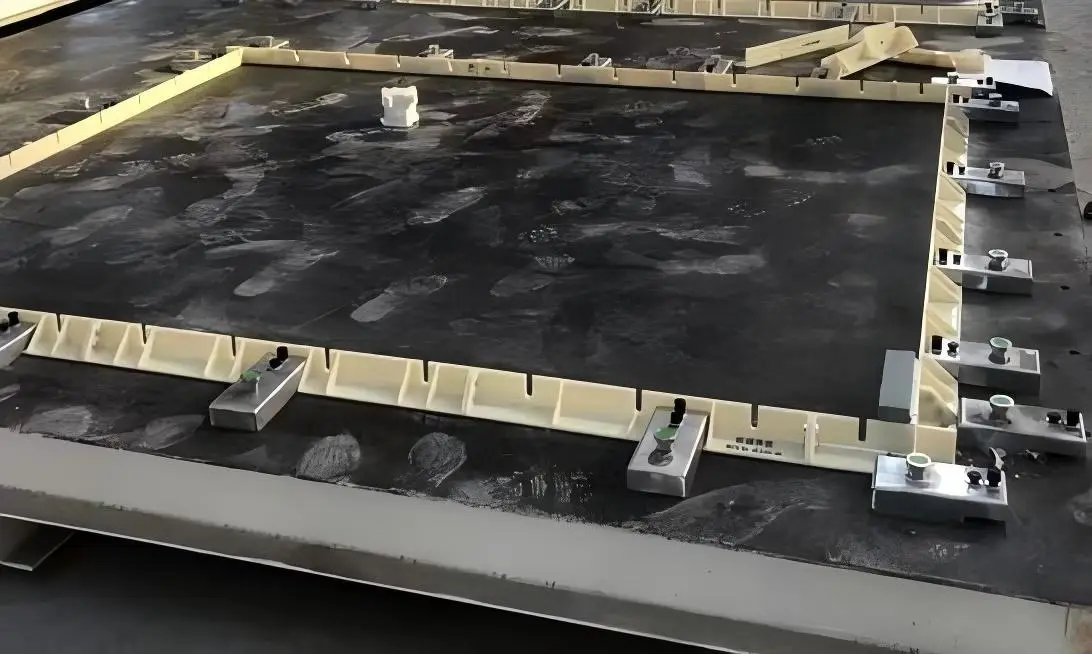
Traditional mold fixing methods usually require welding or bolting, which is not only complex to operate but also consumes a lot of manpower and time. Precast Concrete Magnets, however, use magnetic adsorption to quickly fix themselves to a steel platform; operators only need to press to complete the installation.
This quick fixing method can significantly shorten mold adjustment time and increase production cycle time, making it particularly suitable for high-volume precast component production environments. The efficiency advantage of Precast Concrete Magnets becomes even more pronounced when frequently changing mold sizes.

Improving Mold Positioning Accuracy
In precast component production, the accuracy of mold positioning directly affects the dimensional accuracy of the components. Precast Concrete Magnets possess strong adhesion, effectively preventing formwork displacement during concrete pouring, thus ensuring neat edges and dimensional stability of components.
This stable fixing effect not only reduces rework rates but also lowers later repair costs, helping factories maintain higher product consistency and production efficiency.
Reduced Labor and Maintenance Costs
Traditional fixing methods often require significant manual labor and are prone to damaging the platform, resulting in high maintenance costs over long-term use. Precast Concrete Magnets, however, require no welding, do not damage the steel platform surface, and can be repeatedly reused.
This not only reduces equipment maintenance frequency but also decreases labor input. For modern precast factories with high levels of automation, magnetic fixing systems better meet the demands of high-efficiency production.
Enhanced Production Flexibility
As market demands constantly change and the types of precast components increase, factories need greater production flexibility. Precast Concrete Magnets can quickly adapt to different formwork layouts, enabling production switchovers without complex modifications.
Whether producing wall panels, stairs, balconies, or other PC components, rapid formwork placement can be achieved by flexibly adjusting the position of the magnetic boxes, thereby improving overall production efficiency.

Driving the Upgrade of Intelligent Factories
In the modern precast construction industry, intelligent manufacturing has become an important development direction. Precast Concrete Magnets, due to their ease of operation and compatibility with automated equipment, are being adopted by an increasing number of intelligent production lines.
MORE
18 Jan,2025
Magnetic Box Maintenance Notice Manual

13 Oct,2026
Magnetic Shuttering: Enhancing Efficiency in Electrical Applications

Ningbo Yati Metal Products Co., Ltd.
No. 55, Meiliangqiao Village, Hengjie Town, Haishu District, Ningbo City, Zhejiang Province