Structural Optimization: Unlocking the Key to Precast Anchor Fixing Magnet Adsorption Efficiency
In the production of precast concrete components, the adsorption efficiency of the precast anchor fixing magnet directly affects the stability of the mold and production safety. Improving adsorption efficiency is not simply about piling on strong magnetic materials; rather, it requires sophisticated structural optimization to "guide" and "focus" the magnetic force at the desired location. This is an art of magnetic circuit design, the core of which lies in distributing the magnetic field as needed to maximize magnetic energy utilization.
In the production of precast concrete components, the adsorption efficiency of the precast anchor fixing magnet directly affects the stability of the mold and production safety. Improving adsorption efficiency is not simply about piling on strong magnetic materials; rather, it requires sophisticated structural optimization to "guide" and "focus" the magnetic force at the desired location. This is an art of magnetic circuit design, the core of which lies in distributing the magnetic field as needed to maximize magnetic energy utilization.
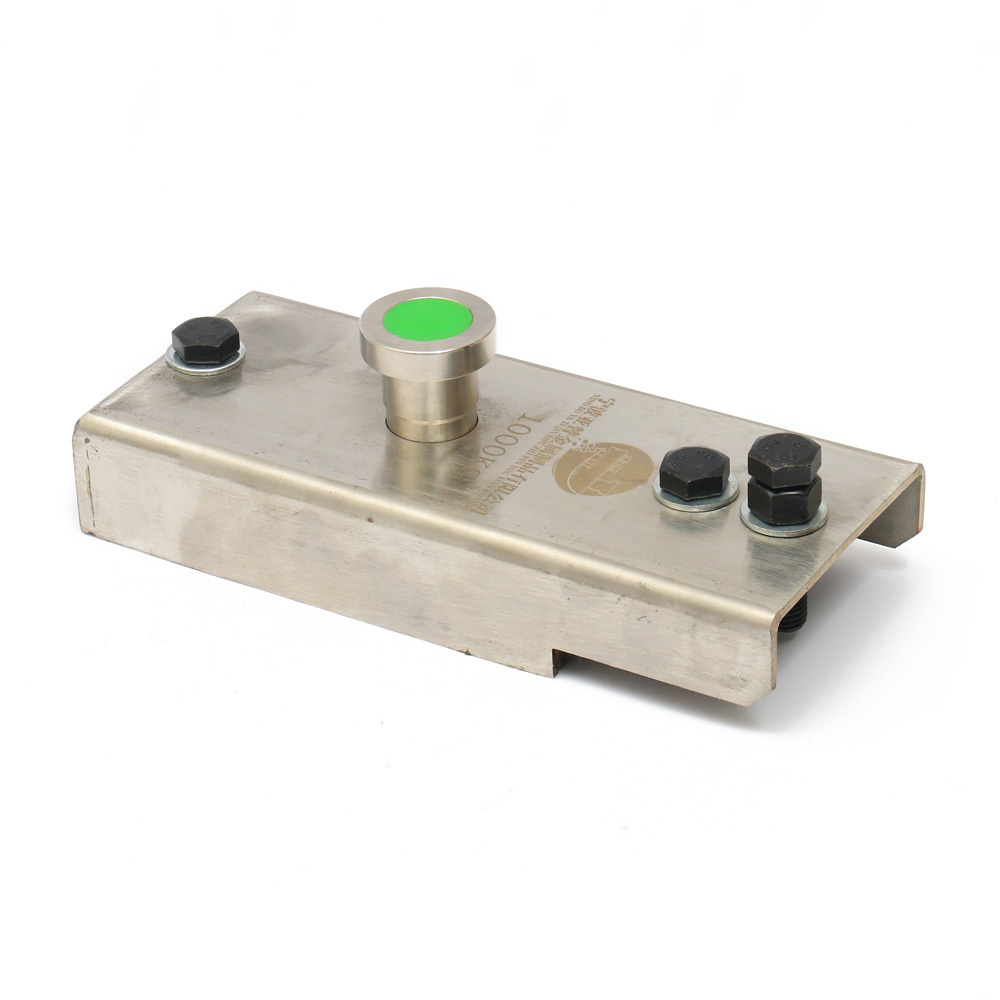
The primary task of structural optimization is optimizing the magnetic circuit. The magnetic circuit acts like a dedicated channel for the magnetic field, designed to guide the magnetic flux efficiently through the working air gap, forming a strong adsorption force while minimizing magnetic leakage. High-performance precast anchor fixing magnets typically use soft magnetic materials with high permeability (such as industrial pure iron) as the magnetic conductor, encapsulating permanent magnets (such as neodymium iron boron) and guiding their magnetic lines of force to concentrate on the adsorption surface. By adjusting the shape and size of the magnetic conductor and the arrangement of the internal magnets, the strength and distribution of the magnetic field can be precisely controlled, ensuring that the magnetic force is concentrated on the mold surface, thereby significantly improving adsorption efficiency.
Secondly, reducing the "working air gap" is a crucial aspect of structural optimization. The air gap is the part with the greatest magnetic reluctance in the magnetic circuit; even a tiny gap can cause a sharp drop in adsorption force. Therefore, the design of the adsorption surface structure of the precast anchor fixing magnet is paramount. The optimized solution is to use a contact surface with elastic compensation or precision mechanical adjustment, which can effectively fill the microscopic unevenness between the magnet and the mold, achieving a near-zero gap fit. This structural design significantly reduces ineffective losses in the magnetic circuit, allowing all precious magnetic energy to be used to generate a strong adsorption force.

Finally, structural optimization also needs to consider magnetic shielding and mechanical balance. In the internal structural design of the magnet, by adding a magnetic shielding layer or optimizing the magnetic pole layout, the magnetic field can be effectively constrained, preventing it from diverging into non-working areas, further reducing magnetic leakage and improving the effective adsorption force. Simultaneously, a reasonable mechanical structure design ensures that the internal stress distribution of the magnet is uniform when subjected to huge adsorption forces, avoiding structural deformation or magnetic circuit misalignment due to excessive localized stress, thereby ensuring the long-term stability of adsorption efficiency.
By optimizing the magnetic circuit, reducing the working air gap, and introducing magnetic shielding and mechanical balance design, the adsorption efficiency of precast anchor fixing magnets can be systematically improved. This approach of driving performance improvement through structural innovation is the core driving force behind the continuous development of magnetic technology.
MORE

18 Jan,2025
Magnetic Box Maintenance Notice Manual
13 Oct,2026
Magnetic Shuttering: Enhancing Efficiency in Electrical Applications

Ningbo Yati Metal Products Co., Ltd.
No. 55, Meiliangqiao Village, Hengjie Town, Haishu District, Ningbo City, Zhejiang Province