Tips for Installing and Using Column Shuttering Magnets
With the rapid development of the prefabricated construction industry, Column Shuttering Magnets are becoming increasingly widely used in the production of precast concrete components. Compared to traditional methods involving welding or bolting, column shuttering magnets offer distinct advantages, such as rapid installation, high reusability, and secure fixation. However, if installed incorrectly, they can compromise formwork precision and construction efficiency. Mastering the correct usage techniques is essential to fully leverage the performance capabilities of these column shuttering magnets.
With the rapid development of the prefabricated construction industry, Column Shuttering Magnets are becoming increasingly widely used in the production of precast concrete components. Compared to traditional methods involving welding or bolting, column shuttering magnets offer distinct advantages, such as rapid installation, high reusability, and secure fixation. However, if installed incorrectly, they can compromise formwork precision and construction efficiency. Mastering the correct usage techniques is essential to fully leverage the performance capabilities of these column shuttering magnets.

Inspect the Platform Surface Before Installation
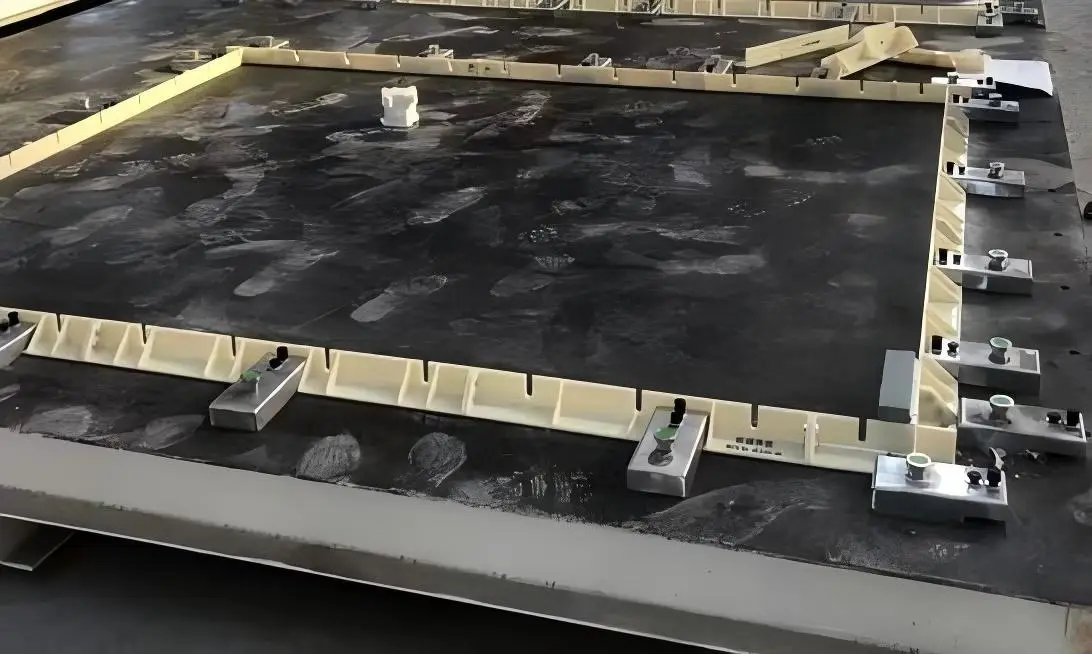
Before installing Column Shuttering Magnets, you must first ensure that the surface of the steel formwork table is clean and flat. If the platform contains concrete residue, metal shavings, or oil stains, it will impair the magnet's suction force, resulting in insecure formwork fixation.
It is recommended to use cleaning tools to prepare the platform prior to installation, ensuring that the magnets make full contact with the steel surface to achieve optimal suction performance.
Select the Appropriate Magnetic Force Based on Formwork Weight
Different formwork specifications require varying levels of magnetic suction force. If the magnetic force is insufficient, the formwork is prone to shifting during concrete pouring; conversely, if the force is excessive, it will increase the difficulty of dismantling the formwork.
Generally, for large column formwork or heavy-duty steel formwork, high-strength Column Shuttering Magnets should be selected; for smaller formwork, models with moderate magnetic force are sufficient. Matching the magnetic force specifications appropriately enhances construction efficiency and minimizes equipment wear and tear.
Ensure Uniform Distribution of Installation Positions
In actual construction practice, many issues regarding formwork deformation can be attributed to an improper layout of the magnets. During installation, magnets should be distributed uniformly based on the length of the formwork and the anticipated load distribution to prevent excessive localized stress.
For taller or longer column formwork, it may be advisable to increase the number of magnets to enhance overall stability. This is particularly important during the concrete vibration process, where a uniform distribution of force effectively mitigates issues related to formwork displacement.
Correct Operation of the Switching Mechanism
Most Column Shuttering Magnets are equipped with a mechanical switching system. During installation, the magnet must first be positioned at the designated spot, after which the switch is engaged to activate the suction force. For dismantling, a specialized pry bar or pull rod is required to disengage the magnetic mechanism.
During operation, avoid striking the body of the magnet directly, as this may damage the internal magnetic structure and reduce the product's service life.

Perform Routine Maintenance and Upkeep
To ensure the long-term, stable performance of Column Shuttering Magnets, routine maintenance and upkeep are of paramount importance. Upon completion of construction, any residual concrete or metal impurities adhering to the base of the magnet should be promptly cleaned off to ensure optimal suction performance during subsequent use.
Furthermore, the housing should be inspected periodically for deformation, and the operation of the switch mechanism should be checked to ensure it functions smoothly. If a noticeable decline in magnetic force is detected, the unit should be repaired or replaced immediately.
Enhancing the Production Efficiency of Precast Components
The proper installation and utilization of Column Shuttering Magnets not only enhance the precision of formwork positioning but also significantly reduce installation time and labor costs. Compared to traditional fastening methods, this magnetic system allows for much faster assembly and disassembly, making it particularly well-suited to meet the demands of large-scale production in modern precast concrete (PC) manufacturing facilities.
MORE
18 Jan,2025
Magnetic Box Maintenance Notice Manual

13 Oct,2026
Magnetic Shuttering: Enhancing Efficiency in Electrical Applications

Ningbo Yati Metal Products Co., Ltd.
No. 55, Meiliangqiao Village, Hengjie Town, Haishu District, Ningbo City, Zhejiang Province